The fleet is bigger than one person’s week.
Several depots, mixed plant, a replacement bill nobody has evidenced in years, and a fleet manager who is one person. This is the same platform and the same record, with us in it: a baseline you can buy on a quote, a programme that puts the record right, and the option to hand over the processing while you keep every decision.
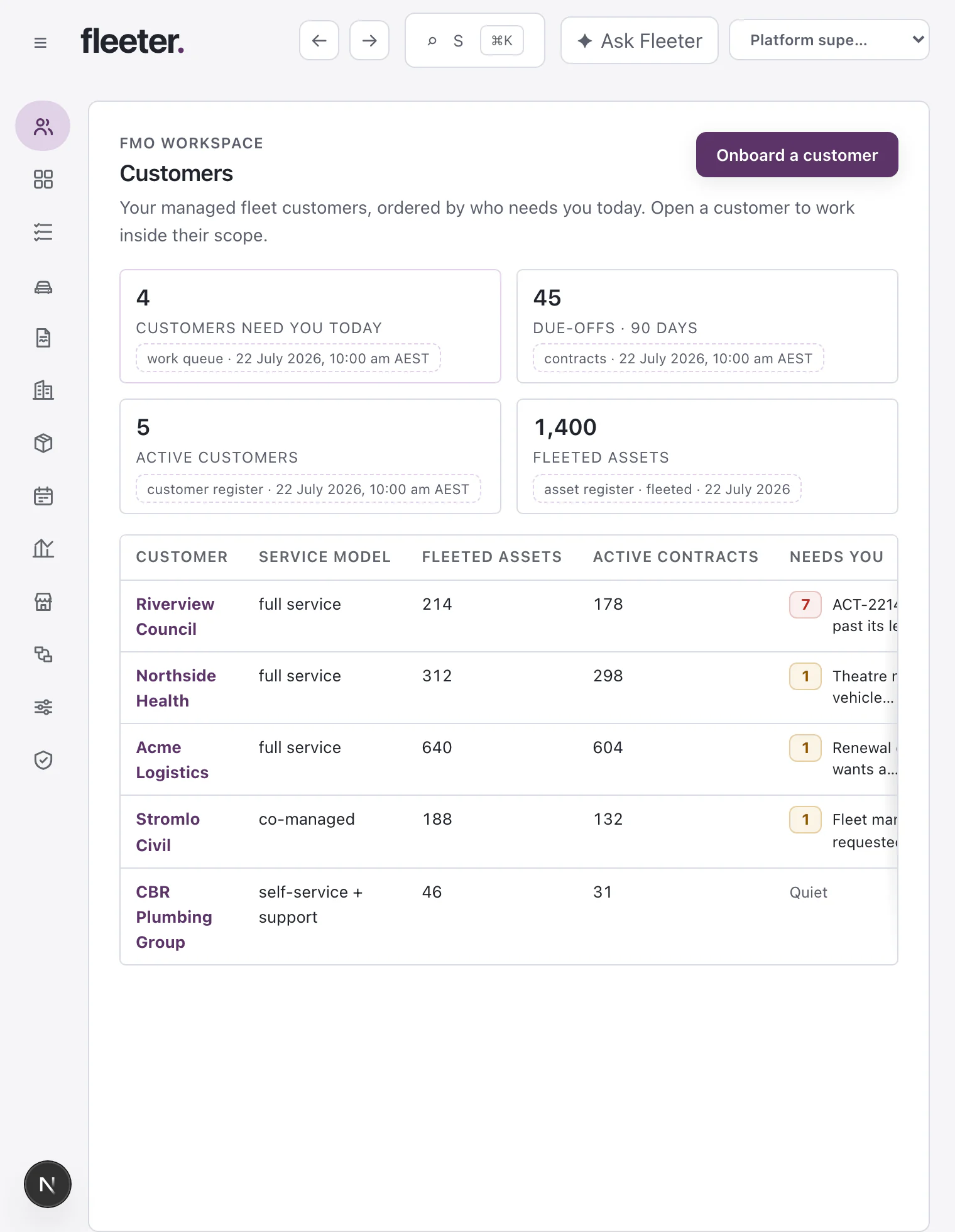
The whole book, as it is built. Sample data, not a customer’s.
The fleet is real. The record of it is in six places.
The asset register lives in finance. The maintenance history lives in a workshop system, or in a folder, or with a contractor. Fuel is in a card portal, tolls are in another, and the reconciliation between all of them lives in one person’s spreadsheet and one person’s head.
Nobody did anything wrong. It is what happens when a fleet grows across sites and nobody was ever funded to keep a single account of it. The work is not to buy a system, it is to put the record right, once, and then keep it right without adding a person.
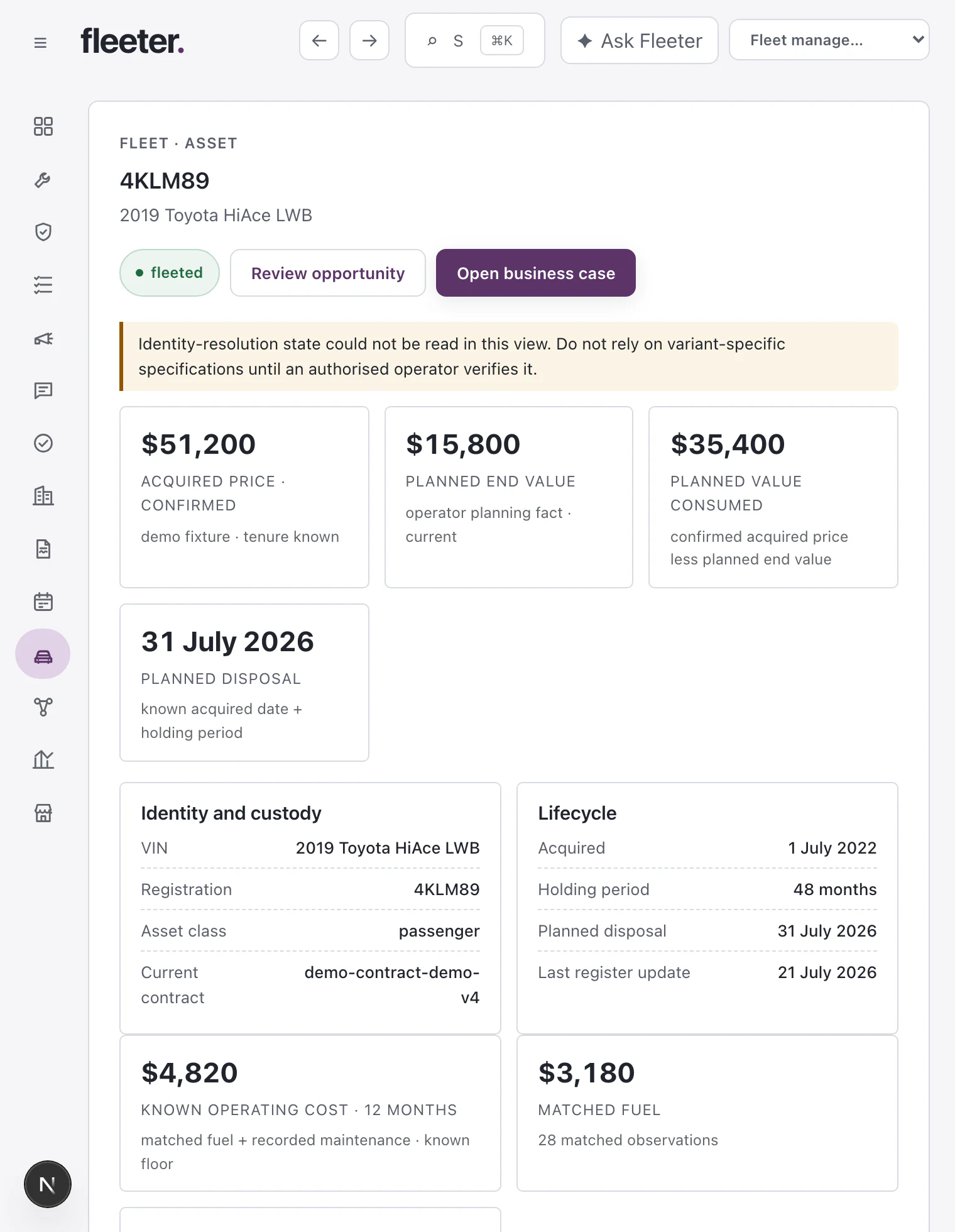
A fixed price baseline, and you keep the result either way.
Bring a fuel card statement, and your asset register if you have one to hand. We baseline what the fleet actually does, role by role, hand back your own data cleaner than it arrived, and show you the fleet you should be running with every figure traced to its source. Nothing live is touched and card numbers are blanked the moment a file is read.
It is $9,500 under 250 vehicles and $19,500 to a thousand. That is deliberately inside the quote thresholds most councils and agencies operate under, so the first step is a decision you can make rather than a tender you have to run. The fee is credited in full against whatever follows.
- Fixed price, fixed scope, agreed before it starts
- Read only. Nothing connects to a live system
- Your data returned cleaner than you sent it, in a format you can keep
- Useful on its own, whether or not you ever run anything on Fleeter
The statements you already get are the evidence we start from.
No template to fill in and no export to commission. The statement your card provider already sends is read as it arrives, and the register starts to build from it: which vehicles are drawing fuel, how much, where, and on whose plant number.
Depot fuel is not left out. Litres issued from your own bowsers count as consumption on the vehicle that took them, so the council with two depots and a card for the outliers sees one picture, not two.
- BP Plus and BP Fleet transaction reports
- Ampol StarCard and FleetCard, formerly Caltex, and AmpolCard tax invoices as PDF
- Shell Card transaction reports from Viva Energy
- WEX and Motorpass purchases by cardholder
- Depot bowsers and in-house fuel logs, matched on the plant number
- Registers where trucks, compactors and plant keep their VIN and plant number on import
Your plan and your risk position are one object.
The moment the fleet includes a truck, the compactor and the tipper, the question stops being cost and starts being duty. Fleeter carries the heavy schedule beside the light fleet, and the risk register sits on the same record as the plan: a matrix in your own words, each open risk in the cell where it was assessed, each control with a named owner and a verification state, and competency evidence per driver with the date it lapses.
When the regulator, the insurer or the board asks, the Fleet Risk Evidence Pack is a single export of that position, attestable by hash, so the version they hold is the version you sent.
- A heavy schedule on the Board, with the light fleet beside it
- Risk matrix, register and controls with named owners and review dates
- Competency coverage per driver, with expiries surfaced before they bite
- The Fleet Risk Evidence Pack: one hash attestable export for management review, tenders, audits and insurers
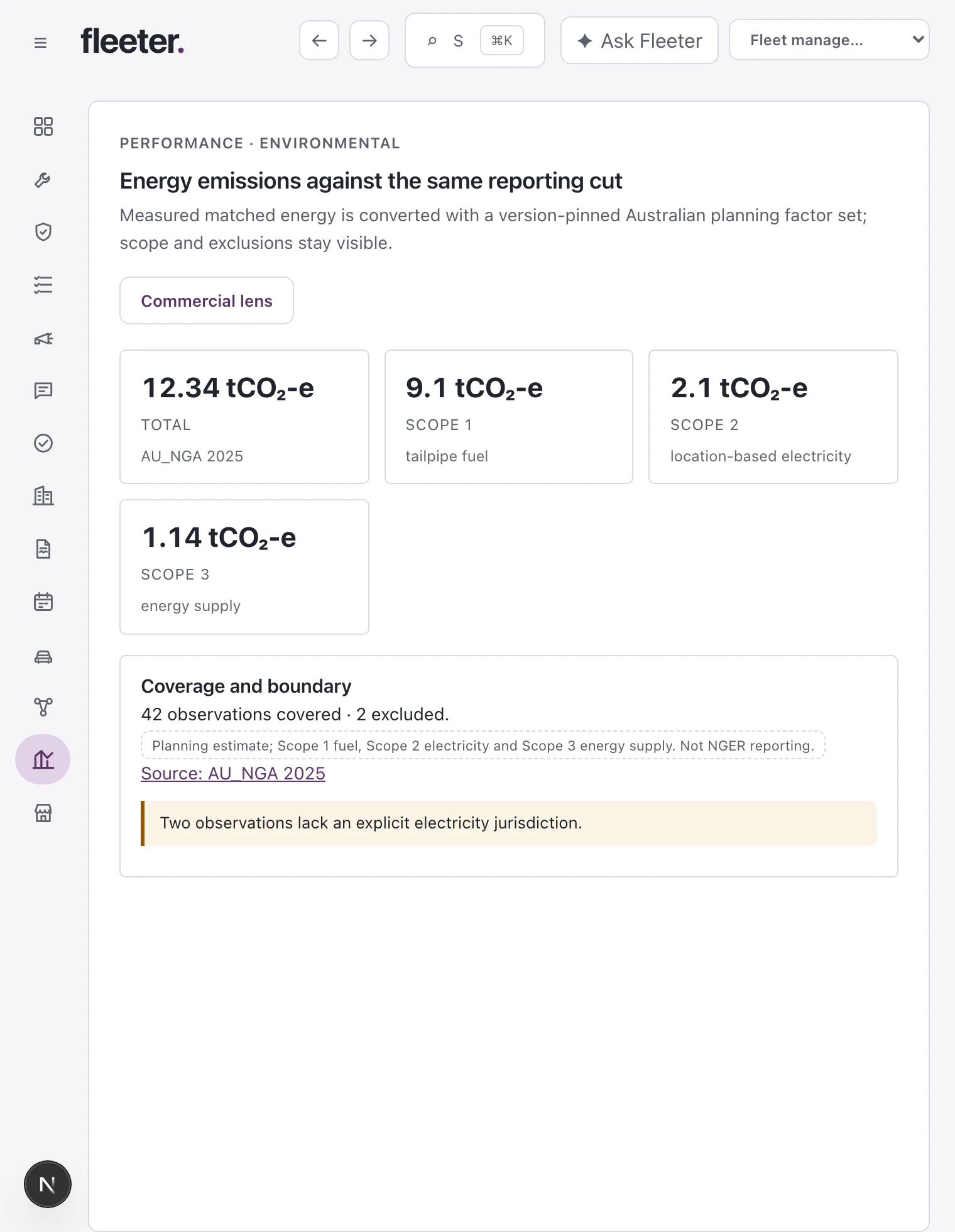
Scope 1, 2 and 3, from the same fuel lines.
The emissions ledger is not a second system fed by a survey. Scope 1 comes from every matched fuel line, Scope 2 from the charging you meter, and the energy supply slice of Scope 3 from both, converted on a version pinned Australian factor set. Coverage and exclusions sit on the page: the observations counted, the ones left out, and why.
It is a planning estimate and it says so. It is also the first emissions figure most fleets have had that a sustainability lead can sign without a caveat they wrote themselves.
Migration without the horror story.
Re-platforming has a reputation and it is earned. What follows the baseline is staged on your real data, in named steps: a census of what you hold, extraction, a golden record per vehicle, a variance report against whatever you run today, and a reconciliation you sign before anything is promoted.
Scope is named before you sign, not discovered later. Going live is a scheduled, recorded approval, not a cutover you brace for.
- Sources and record volumes named in the quote, not estimated afterwards
- A defect register you can audit, not a status call
- Reconciled against what you run today before cutover
- Anything outside the named scope is quoted, never absorbed and never surprising
Keep the decisions. Hand over as much of the processing as you want.
Some organisations want the system and nothing else. Some want the approvals, invoice matching, registrations and claims handled and only the decisions brought to them. The processing is done by a trusted partner working inside your own tenant, on your own record, so moving between the two is a change of arrangement rather than a re-implementation, and your data never moves.
Managed work is priced per vehicle from what your fleet actually takes to run, measured during the programme, rather than from a rate card written before anyone met you.
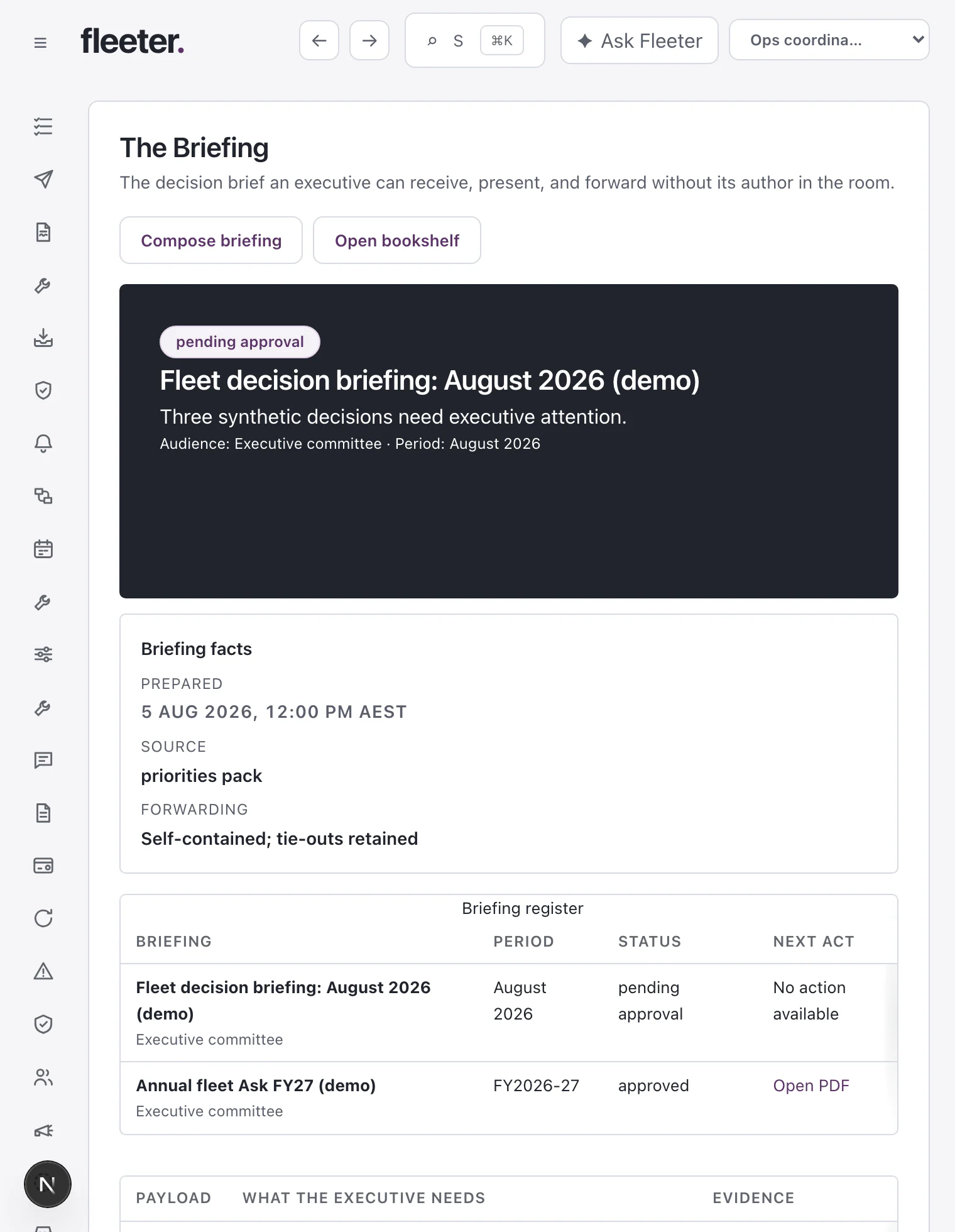
Bring a fuel card statement. Keep the result either way.
The baseline is a fixed price and a fixed scope. You get the report, the forward fleet and your own data back cleaner than you sent it, whether or not you ever run anything on Fleeter.